Can You Run A House On Solar Power Alone? UK
Can you run homes on solar power alone? The answer is a resounding yes! Solar power, derived from the sun’s energy, is not only sustainable and renewable but also offers numerous benefits for homeowners. By harnessing the sun’s power, you can significantly reduce your reliance on traditional electricity grids and heat your homes efficiently. Net metering allows homeowners to sell excess energy back to the utility company, further maximising the benefits of solar power.
So why wait? Join the growing number of households that have embraced solar power as an alternative way to meet their energy needs and reduce their electric bill. With net metering, you can harness the power of the sun to heat your entire home.
Ready to make the switch? Let’s dive right in!
Assessing Your Home’s Energy Consumption Rate
To determine if you can run a house on solar power alone, it’s crucial to assess your home’s energy consumption rate. By understanding how much electricity you use on a daily basis and identifying high-energy-consuming appliances, you can make informed decisions about transitioning to solar power. This includes considering the setup of net metering, which allows you to feed excess energy back into the grid, and ensuring your heat source is compatible with solar power.
Determine your average daily energy usage
Start by examining your electricity bills from the past year to calculate your average daily energy consumption for your entire home. Look for the total kilowatt-hours (kWh) used each month and divide it by the number of days in that month.
This will give you an estimate of how much energy your household consumes on a typical day, which is important when considering installing a solar power system with solar batteries. Consulting with a professional solar installer can help you determine the best solution for your energy needs.
For example, if your monthly bill shows that your whole house consumed 600 kWh over 30 days, your average daily usage for the whole house is approximately 20 kWh. This figure serves as a baseline for evaluating whether solar power can meet the needs of your whole house.
Identify high-energy-consuming appliances in your home
Next, identify the appliances in your whole house that contribute significantly to your overall energy consumption. These are typically devices that consume large amounts of electricity or remain operational for extended periods. Common culprits in an average home include air conditioners, water heaters, refrigerators, and electric heating systems. It’s important to consider these appliances when consulting with a solar installer about solar batteries.
Consider conducting an audit of these appliances to understand their individual energy requirements better. You may find that some models are outdated and less efficient compared to newer alternatives. Upgrading to energy-efficient appliances can help reduce overall consumption and make solar power more feasible for powering your home.
Consider energy-efficient alternatives to reduce consumption
Once you’ve identified high-energy-consuming appliances, explore energy-efficient alternatives that can help lower your electricity usage even further with a solar power system. Here are some options for solar batteries and how they can be integrated into your solar system.
- Replace incandescent light bulbs with LED bulbs in your solar system: LED bulbs use significantly less energy while providing the same amount of light.
- Install programmable thermostats: These devices allow you to set temperature schedules based on when you’re at home or away, optimising HVAC system usage.
- Insulate your home with a more energy-efficient solar system. Proper insulation reduces the need for heating and cooling, resulting in lower energy consumption.
- Use power strips in your solar system: Plug multiple devices into a single power strip to easily turn them off when not in use, eliminating standby power consumption.
By implementing these energy-saving measures, you can decrease your reliance on high-energy-consuming appliances and further optimise your home’s electricity usage in the solar system.
Assessing your home’s energy consumption rate is an essential step towards determining if solar power alone can run your house. By understanding how much electricity you consume daily and identifying opportunities to reduce consumption through energy-efficient alternatives, you can make an informed decision about transitioning to solar power. Remember that excess energy generated by solar panels can be fed back into the grid through net metering programs offered by utility companies. This allows you to accumulate credits on your electric bill for the surplus energy produced, ensuring a reliable and cost-effective source of power for your home.
Evaluating Solar Energy Production Capacity in Your Climate Region
Research the amount of sunlight your region in the solar system receives throughout the year.
When considering whether you can run a house on solar power alone, it is crucial to understand the amount of sunlight your region receives throughout the year. Different climate regions experience varying levels of sunshine, which directly impacts solar energy production capacity. Begin by researching your specific area’s solar insolation, which measures the amount of solar radiation received per square metre. This data will provide valuable insights into how much sunlight is available for harnessing renewable energy.
Understand how weather patterns can affect solar panel efficiency.
Weather patterns play a significant role in determining the efficiency of your solar panels. While solar technology has advanced significantly, adverse weather conditions such as heavy rain, snowfall, or overcast skies can reduce their performance. It is essential to consider how frequently these weather events occur in your climate region and evaluate their potential impact on solar energy production. For example, if you live in an area with frequent cloudy days or long winters with heavy snowfall, it may be necessary to assess whether relying solely on solar power would be feasible.
Assess if your climate is suitable for generating sufficient solar energy.
Evaluating whether your climate is suitable for generating sufficient solar energy involves considering various factors beyond just sunlight availability and weather patterns. The overall environment and state policies also play a crucial role. Some states offer incentives such as tax credits or rebates for adopting renewable energy sources like solar power. Researching state-specific programs and policies can help determine if running a house on solar power alone aligns with local initiatives.
In addition to regional factors, assessing household electricity consumption is vital when evaluating if running a house on solar power alone is feasible. Consider conducting an energy audit to determine average daily electricity usage and compare it with the potential output from a photovoltaic (PV) system based on available sunlight data. Understanding how much electricity your household consumes will provide a clearer picture of whether solar energy production capacity in your climate region can meet your needs.
Optimising Solar Panel Placement for Maximum Efficiency
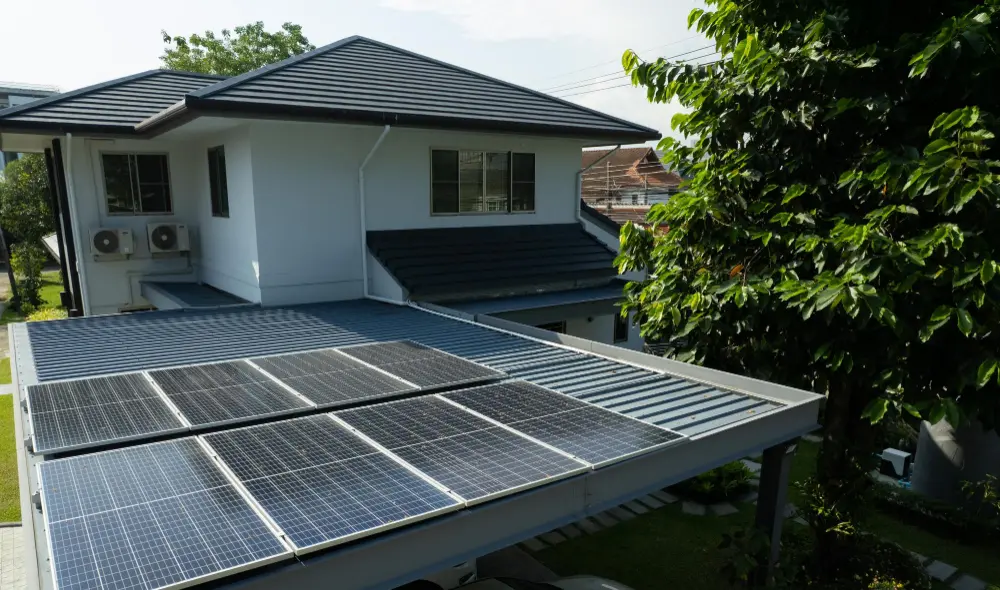
Installing solar panels is a great way to harness the power of the sun and reduce your reliance on the grid. But can you run a house on solar power alone? The answer is yes, but to achieve maximum efficiency, it’s crucial to optimise the placement of your solar panels. Here are some key factors to consider:
Install solar panels where they receive maximum sunlight exposure.
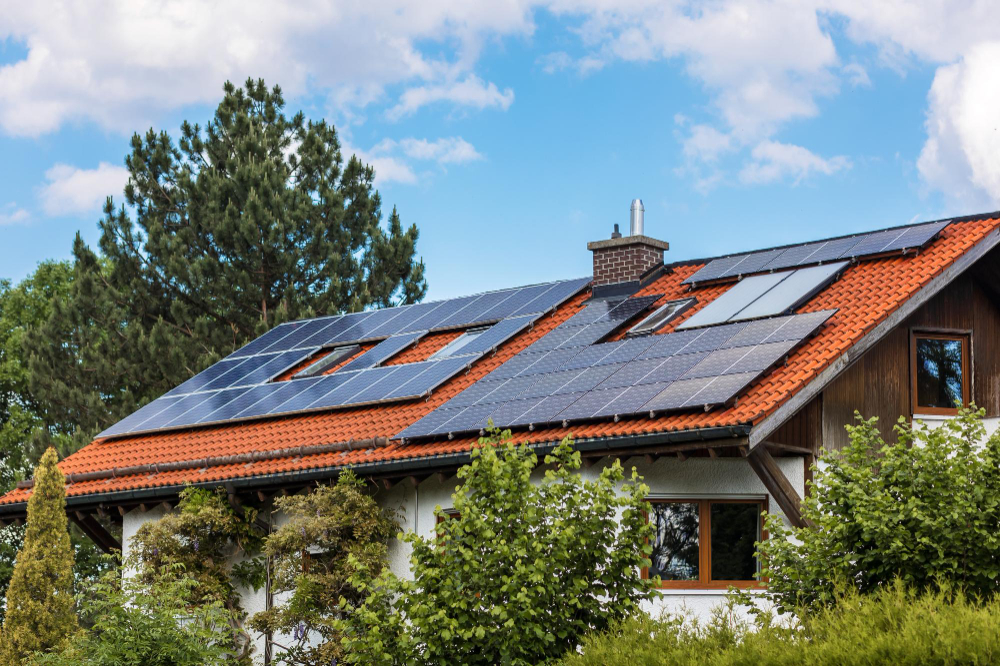
To make the most of solar energy, it’s important to install your panels in areas that receive ample sunlight throughout the day. Identify spots on your property that are free from shading caused by trees, buildings, or other obstructions. This will ensure that your panels can soak up as much sunlight as possible and generate sufficient electricity for your household needs.
Avoid shading from trees, buildings, or other obstructions.
Shading can significantly impact the performance of your solar panels. Even partial shading can lead to a decrease in overall efficiency. Therefore, when choosing a location for installation, take into account any potential sources of shade during different times of the day and year. Trim overhanging branches or consider removing obstacles altogether if necessary.
Angle the panels correctly to capture the most sunlight.
The angle at which you position your solar panels plays a vital role in optimising their efficiency. The ideal tilt angle depends on various factors such as your geographical location and the time of year. In general, aligning them with the latitude of your area provides a good starting point. However, adjusting their angle seasonally can further enhance their performance.
Consider roof orientation and area for panel placement.
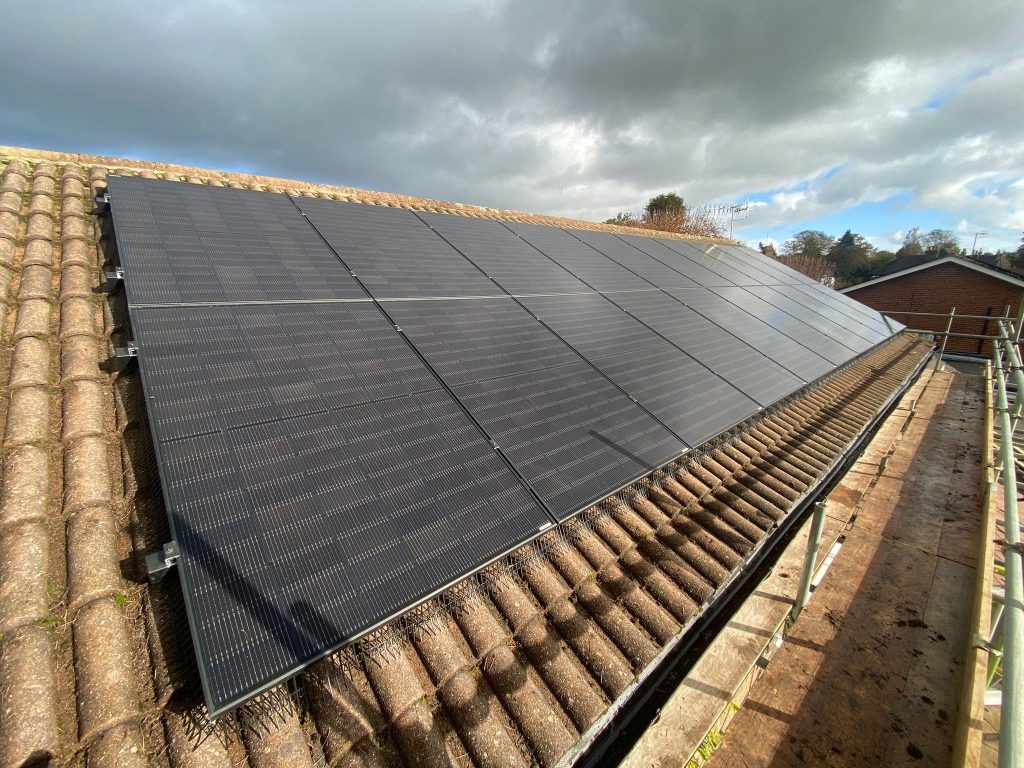
If you have limited space available or prefer not to use ground-mounted systems, installing solar panels on your roof is an excellent option. When evaluating potential locations on your roof, consider its orientation towards the sun and available surface area for panel placement. South-facing roofs typically receive more sunlight throughout the day and are considered optimal for maximising energy production.
Take advantage of grid parity and utility incentives.
Installing solar panels not only reduces your reliance on the grid but can also save you money in the long run. With the concept of grid parity, where solar energy becomes as affordable as traditional grid electricity, it’s becoming increasingly feasible to power your house solely with solar energy. Many utility companies offer incentives and net metering programs that allow you to sell excess electricity back to the grid or receive credits for future use.
Determining the Number of Solar Panels Needed
To run a house on solar power alone, it is crucial to determine the number of solar panels needed. This involves calculating your household’s daily energy requirements, considering the wattage and efficiency of different solar panel models, and determining the size and quantity of panels based on available space.
Calculate your household’s daily energy requirements
The first step in determining the number of solar panels you need is to calculate your household’s daily energy requirements. This can be done by examining your electricity bills or using an online calculator. Take note of your average monthly kilowatt-hour (kWh) usage and divide it by 30 to get an estimate for daily usage.
Once you have this figure, consider any future plans that may increase or decrease your energy needs in the solar system. For example, if you plan to install additional appliances or expand your living space in the solar system, factor in these potential changes when calculating your daily energy requirements in the solar system. Find out if solar panels increase the value of your home, here.
Consider the wattage and efficiency of different solar panel models
Solar panels come in various wattages and efficiencies, which directly impact their power output. When planning for solar power, it is essential to consider these factors to ensure you generate enough electricity for your needs.
Research different solar panel models available in the market and compare their wattages and efficiencies. Look for panels with higher wattages and greater efficiency ratings as they will produce more electricity per square foot.
Determine the size and quantity of panels needed based on available space
The size and quantity of solar panels required depend on both your energy needs and available space for installation. Assess how much rooftop or ground area can be dedicated to housing solar panels.
Calculate the total square footage available for solar system panel placement, taking into account any shading or obstructions that may affect sunlight exposure. It is important to maximise sunlight absorption for optimal solar system performance.
Next, consider the goal you have set regarding running your house solely on solar power. If you aim to cover 100% of your energy needs, you will need to install enough panels to generate the required amount of electricity. However, if you are comfortable with covering only a portion of your energy needs, the number of panels needed will be lower.
To determine the exact number of solar panels needed, divide your daily energy requirements by the average output per panel. This will give you an estimate of how many panels are required to meet your specific needs.
Factors influencing the number of solar panels needed
Several factors can influence the number of solar panels you need:
- Efficiency and wattage: Higher efficiency and wattage ratings mean fewer panels are required to produce a certain amount of electricity.
- Sunlight availability: If you live in an area with ample sunlight throughout the year, fewer panels may be needed compared to regions with less consistent sunlight.
- Energy consumption habits: Energy-efficient appliances and practices can reduce your overall energy consumption, potentially lowering the number of solar panels needed.
- Battery storage: If you plan on using battery storage to store excess energy generated by your solar panels, it may affect the number of panels required as well.
By considering these factors and following the steps outlined above, you can accurately determine the number of solar panels needed to run your house on solar power alone. Remember that it is always advisable to consult with a professional installer who can assess your specific situation and provide personalised recommendations for optimal results.
Exploring the Viability of Powering a Whole House with Solar Energy
Assessing if your current energy needs can be met by solar power alone is an essential step in determining the viability of powering your entire house with solar energy. Residential solar has become increasingly popular as homeowners seek to reduce their carbon footprint and take advantage of renewable energy sources. However, it’s crucial to evaluate whether solar power can provide enough electricity to meet your household’s requirements.
To begin, consider conducting a thorough analysis of your power usage. Assess how much energy you currently consume on a daily basis and compare it to the capacity that residential solar panels can generate. This assessment will give you an idea of whether your energy demands align with what solar power can provide.
If you find that your current power consumption exceeds what solar panels alone can generate, implementing energy-saving measures becomes paramount. By reducing unnecessary electricity usage through simple changes like switching to LED light bulbs or investing in energy-efficient appliances, you can significantly decrease your overall consumption. This reduction allows for a more feasible transition to relying solely on solar power.
Another factor to consider is backup options for days when there is limited sun exposure. While solar batteries have advanced significantly in recent years, they may not always store enough excess electricity to sustain an entire home during extended periods without sunlight. In such cases, having alternative backup systems like generators or access to grid-supplied electricity can ensure an uninterrupted power supply.
Many homeowners have successfully powered their entire houses using solar energy alone by carefully managing their power usage and incorporating backup solutions for cloudy days or high-demand periods. Here are some additional considerations:
- Install a smart metre: Smart metres provide real-time data on your electricity consumption, allowing you to monitor and adjust your habits accordingly.
- Optimise appliance efficiency: Replace old appliances with newer models that are designed for better energy efficiency.
- Utilise natural lighting: Maximise natural lighting during daylight hours by opening curtains and blinds, reducing the need for artificial lighting.
- Consider time-of-use rates: If available in your area, take advantage of time-of-use rates that offer lower electricity costs during off-peak hours.
Estimating the Cost of Installing a Solar Panel System
Research installation costs, including equipment and labour expenses
Installing a solar panel system for your house is an investment that can significantly reduce your reliance on traditional power sources. To get started, it’s crucial to research the costs involved in installing a solar panel system. The cost varies depending on factors such as the size of the system, the type of panels used, and the complexity of the installation.
Solar panel installation costs typically include two main components: equipment and labour expenses. Equipment costs encompass the solar panels themselves, inverters, mounting hardware, wiring, and other necessary components. Labour expenses involve hiring a professional solar installer who will handle the installation process from start to finish.
When researching installation costs, it’s essential to obtain quotes from multiple solar installers in your area. This allows you to compare prices and choose an installer that offers competitive rates without compromising quality. Consider seeking recommendations from friends or family members who have already installed solar panel systems.
Explore available government incentives or tax credits that can offset costs
One significant advantage of investing in a solar panel system is the availability of government incentives and tax credits. These financial incentives are designed to encourage homeowners to adopt renewable energy sources like solar power.
To estimate the cost of installing a solar panel system accurately, explore any available government incentives or tax credits that can offset some expenses. Depending on your location, you may be eligible for federal or state-level programs that provide rebates or grants for installing renewable energy systems.
For instance:
- The Federal Investment Tax Credit (ITC) offers homeowners a credit equal to a percentage (currently 26%) of their total solar panel system cost.
- Some states provide additional incentives such as cash rebates or property tax exemptions for residential solar installations.
Factor in long-term savings from reduced monthly utility bills
While installing a solar panel system involves upfront costs, it’s important to consider the long-term savings it can bring. One significant advantage is the reduction in monthly utility bills.
Once your solar panel system is up and running, it generates electricity from sunlight, which can be used to power your home’s electrical needs. As a result, you will rely less on traditional grid-supplied electricity, leading to reduced monthly utility bills.
The amount of money you save on energy bills depends on various factors such as the size of your solar panel system, local electricity rates, and your household’s energy consumption. On average, homeowners with solar panel systems experience substantial savings over the system’s lifespan.
So Now You Know!
Running a house on solar power alone offers numerous benefits and considerations. By assessing your home’s energy consumption rate, you can determine the feasibility of relying solely on solar energy. Evaluating the solar energy production capacity in your climate region helps you understand the potential output of a solar panel system.
Optimising the placement of solar panels is crucial for maximising efficiency. By strategically positioning them to receive optimal sunlight throughout the day, you can generate more electricity. Determining the number of solar panels needed depends on your energy requirements and available roof space.
While it is possible to power an entire house with solar energy, it is essential to consider factors such as peak demand times and seasonal variations in sunlight availability. This ensures that your system meets your household’s needs consistently.
Estimating the cost of installing a solar panel system allows you to budget accordingly. While upfront costs may be involved, long-term savings on electricity bills make it a worthwhile investment. Various incentives and rebates are often available to help offset initial expenses.
By harnessing the power of solar energy, you contribute to a greener environment by reducing reliance on fossil fuels and lowering carbon emissions. Solar power also provides independence from fluctuating utility prices while offering potential financial savings over time.
To get started with running your house on solar power alone, consider consulting reputable solar installation companies or contacting local renewable energy organisations for guidance specific to your area. They can provide personalised advice based on your home’s unique characteristics and help you navigate any regulations or permits required for installation.
So why wait? Take control of your energy consumption today by exploring the possibilities of running your house on solar power alone!