How Many Solar Panels Needed To Power A House?
Thinking of going solar? Wondering how many solar panels it takes to power your house with enough electricity? Well, we’ve got the answers you need! Understanding the importance of determining the right number of solar panels is crucial for meeting your electricity needs. With a well-sized solar panel system, you can unlock a multitude of benefits that come with powering your home using clean, renewable energy. But how many watts of solar power does your home actually need under direct sunlight? Let’s dive in!
Calculating the number of solar panels depends on factors such as household energy demand, required wattage for appliances, and more. Typically, an average household requires around 17 to 21 solar panels to completely counterbalance energy costs through solar power. The quantity of solar panels necessary is influenced by several important elements, which encompass where you’re situated geographically and the specific specifications of the panels you’re using.

So, if you’re ready to embrace sustainable living and cut down on utility bills, let’s explore how many solar panels will generate enough electricity to make your whole house shine bright with clean energy! Additionally, considering solar battery storage can ensure that you have much solar power available even when the sun isn’t shining.
Factors to consider when calculating the number of solar panels
Evaluating your average daily energy consumption
To determine how many solar panels you need to power your entire home and meet the requirements of your electrical system, it’s essential to evaluate your average daily energy consumption. Take a look at your home insurance bills from the past year and calculate the average kilowatt-hours (kWh) used per day. This will give you a baseline figure to work with in determining the appropriate system size.
Consider any major appliances or devices that consume a significant amount of electricity in your home. For example, if you have an electric water heater or use air conditioning extensively, these factors will contribute to higher electricity needs. By identifying these high-energy items, you can better estimate the number of solar panels required to reduce your electricity bill and save on kilowatt-hours (kWh).
Considering your location and available sunlight hours
The amount of sunlight your location receives is another crucial factor in determining the number of solar panels needed for energy use. Different regions have varying levels of sunlight throughout the year, which directly impacts the efficiency and output of solar panels in generating electricity.
Areas with more sunshine will generate more electricity in kilowatt-hours (kWh) from each solar panel compared to regions with less sun exposure. Therefore, it’s important to take into account the available sunlight hours specific to your location when calculating how many solar panels are necessary for powering your home. This calculation should be based on the square metres of your home and the energy needs it requires. Additionally, considering the use of heat pumps can optimise energy efficiency.

Factoring in the efficiency rating of solar panels
Solar panel efficiency is crucial in determining the number of panels required for your bedroom. Higher efficiency ratings mean more electricity production per panel, reducing energy use and lowering kwh prices.
When considering solar panel options, pay attention to their efficiency ratings and prices. Panels with higher efficiency ratings may have higher prices initially but can potentially require fewer units overall due to their increased output capacity in kwh. However, keep in mind that higher efficiency often comes at a higher cost.
Assessing any potential shading issues on your property
Shading issues can significantly impact the performance and effectiveness of solar panels in a home. Even partial shading on just one panel can reduce its overall output of kwh substantially.
When evaluating how many solar panels are needed for your home, assess your property for any potential shading issues. Consider nearby trees, buildings, or structures that may cast shadows on the panels during peak sunlight hours. If shading is a concern, it might be necessary to install additional air source heat panels to compensate for the reduced output.
By carefully considering your average daily energy consumption, location and available sunlight hours, solar panel efficiency rating, and potential shading issues on your property, you can make an informed decision regarding the number of panels needed to power your house. Remember that factors such as solar panel cost and individual figures will vary depending on your specific circumstances. It’s always recommended to consult with a professional solar installer who can provide personalised advice tailored to your home’s requirements.
Understanding your energy consumption: Calculating your solar panel needs
Determining how much electricity you use daily is an important step when considering installing solar panel systems. By understanding your energy consumption, you can accurately assess the solar panel cost and determine the appropriate size of your solar panel system. Additionally, considering solar battery storage can help optimise your energy usage and maximise the benefits of your solar panel installation. To get started, consult with a professional solar panel installer who can provide expert guidance and help you make informed decisions about your solar energy needs.
To accurately calculate the number of solar panels needed to power your home, it’s crucial to understand your energy consumption. Start by examining your home energy bills to determine your average electricity usage in kilowatt-hours (kWh) over a specific period. This will give you a baseline for estimating your home energy needs.
Analysing seasonal variations in energy consumption
Energy usage at home often fluctuates throughout the year due to seasonal changes in temperature and daylight hours. Consider how these variations affect your home’s electricity needs when calculating the number of solar panels required. For example, during hot summer months, air conditioning usage at home may significantly increase, leading to higher energy demands. By analysing these patterns, you can better estimate the appropriate capacity for your home solar system.
Estimating future changes in electricity usage patterns
When determining the number of solar panels needed for your home, it’s important to consider potential future changes in your home’s electricity consumption. Are you planning on expanding your household or adding new appliances that consume significant amounts of energy? Anticipating these changes will ensure that the solar system you install can meet your evolving home needs without requiring additional adjustments down the line.
When considering the installation of solar panel systems for your home, it is important to consult with a professional solar panel installer. They have the expertise and knowledge needed to accurately calculate the number of solar panels you will need for your specific home. Using online tools or consulting with professionals for accurate calculations is crucial in ensuring that your solar panel system is efficient and meets your energy needs.
While it’s possible to make rough estimates using basic calculations, leveraging online tools or seeking professional advice can provide more accurate results for your home’s solar needs. Numerous online calculators are available that take into account factors such as location, roof orientation, shading, and local weather conditions for monocrystalline panels. These tools consider various parameters and generate precise recommendations tailored specifically to your situation. Consulting with solar professionals ensures that all aspects are thoroughly evaluated before making any decisions.
By understanding your energy consumption and following these steps for calculating solar panel requirements, you can determine precisely how many panels you need for powering your home sustainably while reducing both costs and carbon footprint.
Remember:
- Assess average electricity usage from past energy bills.
- Consider seasonal variations in energy consumption.
- Anticipate future changes in electricity usage patterns.
- When determining the solar panel dimensions you need for your home, it is important to utilise online tools or consult with professionals for accurate calculations.
With this knowledge, you can confidently embark on your solar panel journey, harnessing the power of the sun to efficiently meet your household’s energy needs at home.
Optimising solar panel capacity: Roof space, orientation, and inclination
Assessing the available roof space for installing solar panels
One of the first considerations when installing solar panels at home is assessing the available roof space. The size of your home’s roof will determine how many solar panels you need and the amount of electricity you can generate.
To determine if your home’s roof has enough space for a solar array, measure its dimensions and calculate the area. Keep in mind that not all areas in your home may be suitable for installation due to obstructions like chimneys or skylights. Consider any shading from nearby structures or trees that could impact sunlight exposure.
Understanding how roof orientation affects energy production
The orientation of your home’s roof plays a crucial role in optimising energy production from your solar system. Ideally, south-facing roofs receive the maximum direct sunlight throughout the day. However, east- and west-facing roofs can also be viable options depending on factors such as local climate and electricity consumption patterns.
If your home’s roof faces north or has limited southern exposure, don’t worry! There are still ways to maximise energy production. One option is using tilt frames to adjust the angle of the solar panels for better sun capture. Another alternative is installing solar panels on multiple sides of your roof to cover different orientations. These solutions are perfect for homes that need to optimise energy generation.
Considering optimal tilt angles for maximum sunlight exposure
Apart from considering the direction your home’s roof faces, it’s essential to think about the optimal tilt angle for your solar panels. The angle should allow them to receive maximum sunlight exposure throughout different seasons.
In general, a fixed tilt angle equal to your home’s latitude can provide satisfactory results year-round. For example, if you live near 40 degrees latitude, setting an inclination of 40 degrees would optimise energy generation for your home. However, adjustable mounting systems exist that enable seasonal adjustments if desired.
Exploring alternative installation options if roof space is limited
In some cases where home roof space is limited or not suitable for solar panel installation, alternative options can be explored to power your house with solar energy. Here are a few possibilities for home solar power.

- Ground-mounted systems: If you have ample yard space, consider installing solar panels on the ground using mounting racks. This option allows for flexibility in choosing the optimal orientation and tilt angle.
- Solar pergolas or awnings: These structures combine functionality and aesthetics by integrating solar panels into pergolas or awnings. They provide shade while generating electricity, making them a popular choice for homeowners with limited roof space.
- Community solar programs: If all else fails, you may still be able to benefit from solar energy through community solar programs. These initiatives allow individuals to subscribe to a shared solar array located off-site, typically within their utility’s service area.
By exploring these alternative installation options, even those with limited roof space can take advantage of solar technology and contribute to a greener grid.
Choosing the right solar panel size: A comprehensive guide
One of the key considerations is choosing the right solar panel size. The size of your solar panels will directly impact the overall output of your system and its cost-effectiveness. In this guide, we will explore different sizes and wattages of solar panels, how panel size affects system output, evaluate cost-effectiveness based on power generation goals, and consider future expansion or additional energy requirements.
Comparing different sizes and wattages of solar panels
Solar panel sizes can vary significantly, ranging from small residential panels to large commercial installations. The physical dimensions of solar panels are measured in length, width, and thickness. Their power output is measured in watts (W). When comparing different sizes and wattages of solar panels, consider factors such as available roof space or mounting area, energy consumption needs, budget constraints, and local regulations.
Here are some common solar panel sizes:
- 60-cell panels: These are standard residential-sized panels that typically measure around 65 inches by 39 inches.
- 72-cell panels: Slightly larger than the 60-cell counterparts, these measure approximately 77 inches by 39 inches.
- Thin-film panels: These flexible panels come in various shapes and sizes but generally have lower efficiency compared to traditional crystalline silicon-based ones.
Understanding how panel size affects overall system output
The size of your solar panel directly impacts the amount of electricity it can generate. Larger panels generally have higher wattage ratings and produce more electricity per unit area. However, it’s important to note that bigger isn’t always better. Factors such as shading issues or limited roof space may restrict the installation of larger panels.
To determine how many solar panels you need to power your house adequately:
- Assess your average daily electricity consumption.
- Calculate the total wattage needed based on your energy consumption.
- Divide the total wattage by the wattage rating of your chosen solar panel to determine the number of panels required.
Evaluating cost-effectiveness based on desired power generation
When considering solar panel size, it’s crucial to evaluate cost-effectiveness. Larger panels may generate more electricity, but they also tend to be more expensive. To determine the most cost-effective option for your needs:
- Calculate the cost per watt for different panel sizes and types.
- Consider government incentives, tax credits, and rebates that can offset installation costs.
- Assess long-term savings from reduced electricity bills.
Considering future expansion or additional energy requirements

While determining the right solar panel size for your current needs is essential, it’s also wise to consider potential future expansion or additional energy requirements. If you anticipate increased electricity consumption in the future due to lifestyle changes or expanding your household, opting for a slightly larger system now can save you money in the long run.
Powering your house with solar energy: Considerations and possibilities
Exploring various ways to utilise generated solar power effectively
It’s essential to explore the various ways you can effectively utilise the power generated by your solar panels. Solar power is a clean and renewable source of energy that can significantly reduce your reliance on traditional electricity sources. By understanding how to make the most of your solar energy, you can maximise its benefits and potentially even eliminate your dependence on the national grid.
Integrating battery storage systems for backup during low sunlight periods
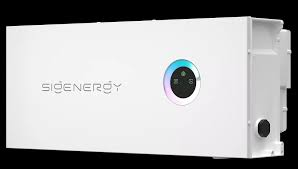
One of the key considerations when harnessing solar power for your house is integrating battery storage systems. These batteries allow you to store excess electricity generated during sunny periods and use it when there isn’t enough sunlight available.
This ensures that you have a reliable backup power supply during low sunlight periods or in case of emergencies. Solar battery storage systems come in different capacities, allowing you to choose one that suits your electrical needs.
Connecting to the grid through net metering programs
Another option to consider when using solar power for your house is connecting to the grid through net metering programs. Net metering allows you to send any excess electricity generated by your solar panels back into the grid, earning credits from your utility company. During times when your solar panels aren’t producing enough electricity (such as at night), you can draw power from the grid using these credits. This way, you can maintain a balance between what you consume from the grid and what you contribute back.
Assessing feasibility and costs associated with off-grid systems
For those looking for complete independence from the national grid, off-grid systems are worth considering. Off-grid systems involve relying solely on solar power and battery storage without any connection to the utility company’s electrical system. However, before opting for an off-grid system, it’s crucial to assess its feasibility and associated costs carefully. Factors such as the location of your house, the amount of electricity you consume, and the availability of sunlight will determine if an off-grid system is a viable option for you.
To make an informed decision, consider consulting with solar energy experts who can assess your specific requirements and provide guidance on the feasibility and costs associated with off-grid systems.
Evaluating photovoltaic panels: Cost and performance factors
One of the key considerations is determining how many solar panels are needed. However, before delving into the specifics, it’s important to evaluate the cost and performance factors associated with photovoltaic (PV) panels. By comparing upfront costs versus long-term savings, assessing efficiency and performance ratings, considering warranties and maintenance requirements, as well as exploring available incentives or rebates, homeowners can make informed decisions about their solar PV system.
Comparing upfront costs versus long-term savings from high-quality panels
While the initial cost of installing a solar PV system may seem daunting, it’s crucial to consider the long-term savings potential. Opting for high-quality panels might require a larger investment upfront but can yield significant benefits in the future. These premium panels often boast higher efficiency ratings and power output capacities compared to cheaper alternatives. Although they may come with a higher price tag initially, their ability to generate more electricity over time can lead to substantial savings on energy bills.
Assessing the efficiency and performance ratings of different panels
When evaluating solar PV panels for residential use, efficiency plays a vital role in determining their effectiveness. Panels with higher efficiency ratings convert more sunlight into usable electricity, maximising energy production. Monocrystalline panels are known for their superior efficiency due to their uniform structure that allows electrons to flow freely. On the other hand, polycrystalline panels offer a more affordable option while maintaining reasonable levels of efficiency.
To assess panel performance accurately, homeowners should also consider power rating specifications. This rating indicates how much electricity each panel can produce under standard test conditions. By selecting panels with higher power ratings, homeowners can generate more energy even when space is limited.
Considering warranties, durability, and maintenance requirements
Solar PV systems are designed for long-term use; therefore, evaluating warranties and durability is crucial. Reputable providers often offer warranties that cover panel performance, ensuring homeowners’ peace of mind for a specified period. Considering the expected lifespan of panels is essential as it directly impacts their overall cost-effectiveness.
Maintenance requirements should also be taken into account when choosing solar PV panels. While these systems typically require minimal upkeep, it’s important to understand any specific cleaning or inspection needs to ensure optimal performance. Regular maintenance can help identify and address any issues promptly, maximising the lifespan and efficiency of the panels.
Exploring available incentives or rebates for solar panel installations
To encourage the adoption of solar energy, various incentives and rebates are often available for homeowners installing solar PV systems. These financial benefits can significantly offset the upfront costs associated with purchasing and installing panels. Government programs at local, state, and federal levels may offer tax credits or grants to promote renewable energy usage. Utility companies might provide net metering programs where excess electricity generated by homeowners’ solar systems is fed back into the grid in exchange for credits on future bills.
By taking advantage of these incentives or rebates, homeowners can further reduce the overall cost of their solar panel installation while contributing to a sustainable future.
Conclusion
Determining the ideal number of solar panels for your home involves considering several factors. First, you need to understand your energy consumption and calculate your solar panel needs. This will help you determine the amount of electricity required to power your house.
Next, it’s important to optimise solar panel capacity by considering factors such as roof space, orientation, and inclination. These elements can affect the efficiency and output of your solar panels.
Choosing the right solar panel size is crucial. A comprehensive guide can assist you in making an informed decision based on factors like available budget, energy requirements, and available space.
By powering your house with solar energy, you can enjoy numerous benefits while reducing your carbon footprint. However, it’s essential to consider various considerations and possibilities when transitioning to solar power.
Evaluating photovoltaic panels requires careful consideration of cost and performance factors. Researching different options can help you select the most suitable panels that align with your budget and energy goals.
In conclusion, determining how many solar panels are needed to power a house involves assessing energy consumption, optimising capacity, choosing appropriate sizes, and evaluating different options. By taking these steps into account, you can make an informed decision that suits both your energy needs and financial capabilities.